


The SAMP miniseries that began with Why a SAMP Matters (Asset Management Framework, AMF #21) has now delivered the complete foundational playbook: SAMP’s role as a trust engine (AMF #22), SAMP integration with risk management (AMF #23), the SAMP maturity ladder that elevates it from compliance to innovation (AMF #25), real-world case studies (AMF #26), the step-by-step process for building it (AMF #27), and the ready-to-use convening document template (#28). This final entry in the series shifts focus from design and documentation to activation. It provides Asset Management Change Agents with the practical, operational playbook for turning the SAMP into a living command-and-control system that drives organizational success through disciplined application of the AM Framework (shown below}.
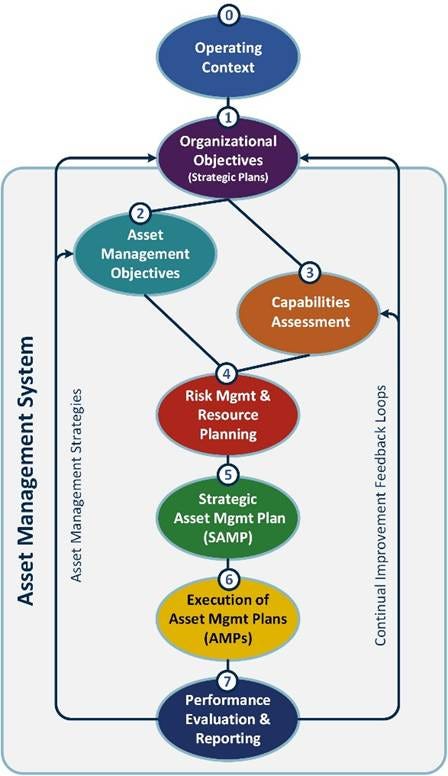
A SAMP that sits on the shelf is merely aspirational. A SAMP that is actively implemented is the disciplined activation of the AM Framework—specifically Management Activity Group (MAG) #5 (Strategic Asset Management Plan) feeding directly into MAG #6 (Asset Management Plan Execution) and MAG #7 (Performance Evaluation and Reporting). The AM Framework’s closed-loop logic ensures that policy, strategy, objectives, budgets, resources, and capabilities are reconciled and executed in alignment with Organizational Objectives (MAG #1) and Asset Management Objectives (MAG #2). The result is measurable value generation, risk-informed decision making, and continual improvement across the full asset portfolio lifecycle.
This article operationalizes every requirement in ISO 55001:2024 clause 6.2.1 while showing exactly how the SAMP template from #28 becomes an executable instrument. It also reinforces the foundational concepts developed throughout entries #21–#28 and prepares the organization for the concluding article in this miniseries, which will focus on the establishment, alignment, and continual refinement of SAMP led objectives.